Introduction
Global businesses increasingly work with suppliers, vendors, and partners across multiple countries. While international sourcing offers operational advantages, it also introduces new financial complexities especially when it comes to managing supplier invoices.
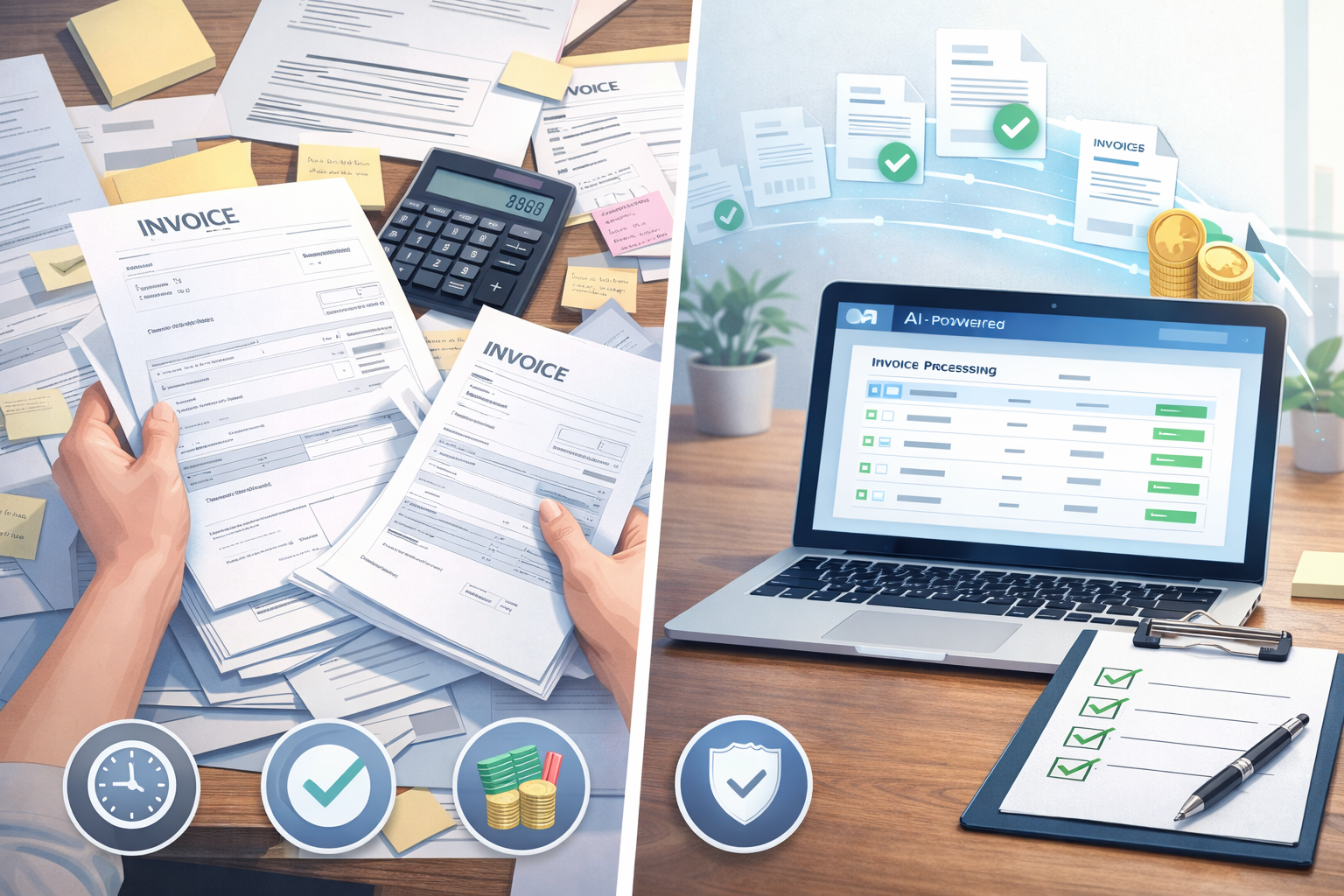
Companies often receive invoices in different languages, currencies, and formats. Some vendors still issue handwritten bills, while others send scanned PDFs, email attachments, or region-specific templates that vary widely in structure. Processing these invoices manually can create significant operational challenges for finance teams.
Without a structured system, businesses may face:
- Data entry errors
- Delayed supplier payments
- Duplicate invoice entries
- Tax misclassification
- Increased audit risk
This is where handwritten and multi-language invoice processing becomes essential. Modern solutions combine invoice data entry services, OCR invoice processing, and accounts payable automation to accurately capture invoice data regardless of language or format.
By implementing structured invoice processing workflows, global businesses can improve accuracy, maintain compliance with international tax regulations, and streamline accounts payable operations.
Why Invoice Processing Becomes Complex for Global Businesses
Managing invoices domestically is already time-consuming. When suppliers operate across multiple countries, the complexity increases significantly.
Global organizations must process invoices that differ in:
- Language
- Tax systems
- Currency formats
- Vendor documentation standards
- Regulatory requirements
Common complexities in global invoicing
Finance teams often deal with:
- Different invoice layouts from international suppliers
- Currency conversions
- Country-specific tax terminology
- Regional accounting compliance requirements
For example:
- A supplier in Germany may list VAT as “MwSt” (Mehrwertsteuer)
- A French vendor may show “TVA” (Taxe sur la Valeur Ajoutée)
- An Indian vendor may include GST split into CGST and SGST
Without proper multi-language accounting support, finance teams may misinterpret tax fields or incorrectly record financial data.
This is why many organizations rely on OCR invoice processing and professional invoice data entry services to standardize global invoices into a consistent accounting format.
Challenges in Multi-Language Invoices
Processing foreign-language invoices manually creates both operational inefficiencies and compliance risks.
1. Different Tax Formats
Tax reporting varies significantly across countries.
Examples include:
- GST (India)
- VAT (Europe and UK)
- TVA (France)
- MwSt (Germany)
If tax classifications are entered incorrectly, companies may face:
- Incorrect tax filings
- Regulatory penalties
- Reconciliation issues
2. Foreign Tax Terminology
Accounting teams may struggle to interpret invoice terminology when suppliers use unfamiliar language.
For example:
| Country | Tax Term on Invoice |
| Germany | MwSt |
| France | TVA |
| Spain | IVA |
| India | GST |
Without translation or standardized processing workflows, these fields can easily be misinterpreted.
3. Currency Differences
International invoices may include currencies such as:
- USD
- EUR
- GBP
- INR
- SGD
Finance teams must ensure:
- Correct exchange rate application
- Accurate accounting entries
- Proper financial reporting
Errors in currency conversion can lead to incorrect profit calculations and reconciliation issues.
4. Compliance Variations
Different countries have different requirements for invoice documentation, including:
- Tax ID formats
- Invoice numbering systems
- Mandatory supplier information
Businesses that operate globally must maintain strict compliance with each jurisdiction.
Professional multi-country accounts payable outsourcing services help companies handle these variations accurately.
Related post: How to Reduce Invoice Processing Time with AI
Risks of Handwritten Invoice Processing
Despite digital transformation, many suppliers especially smaller vendors still send handwritten invoices or scanned documents.
While these invoices may appear simple, they introduce serious risks.
Common problems with handwritten invoices
Handwritten invoices can lead to:
- Illegible vendor names
- Missing tax identification numbers
- Incorrect invoice totals
- Manual calculation errors
- Incomplete billing details
For example, a handwritten invoice from a local supplier may include:
- Supplier name written unclearly
- GST number partially visible
- Handwritten totals that require recalculation
These issues force finance teams to spend additional time verifying data.
Financial and compliance risks
Manual handwritten invoice processing can result in:
- Duplicate payments
- Incorrect ledger entries
- Tax reporting errors
- Vendor reconciliation issues
- Audit complications
This is why many companies now use OCR for handwritten invoices to digitize and verify invoice data before entering it into accounting systems.
How OCR and Automation Improve Invoice Processing
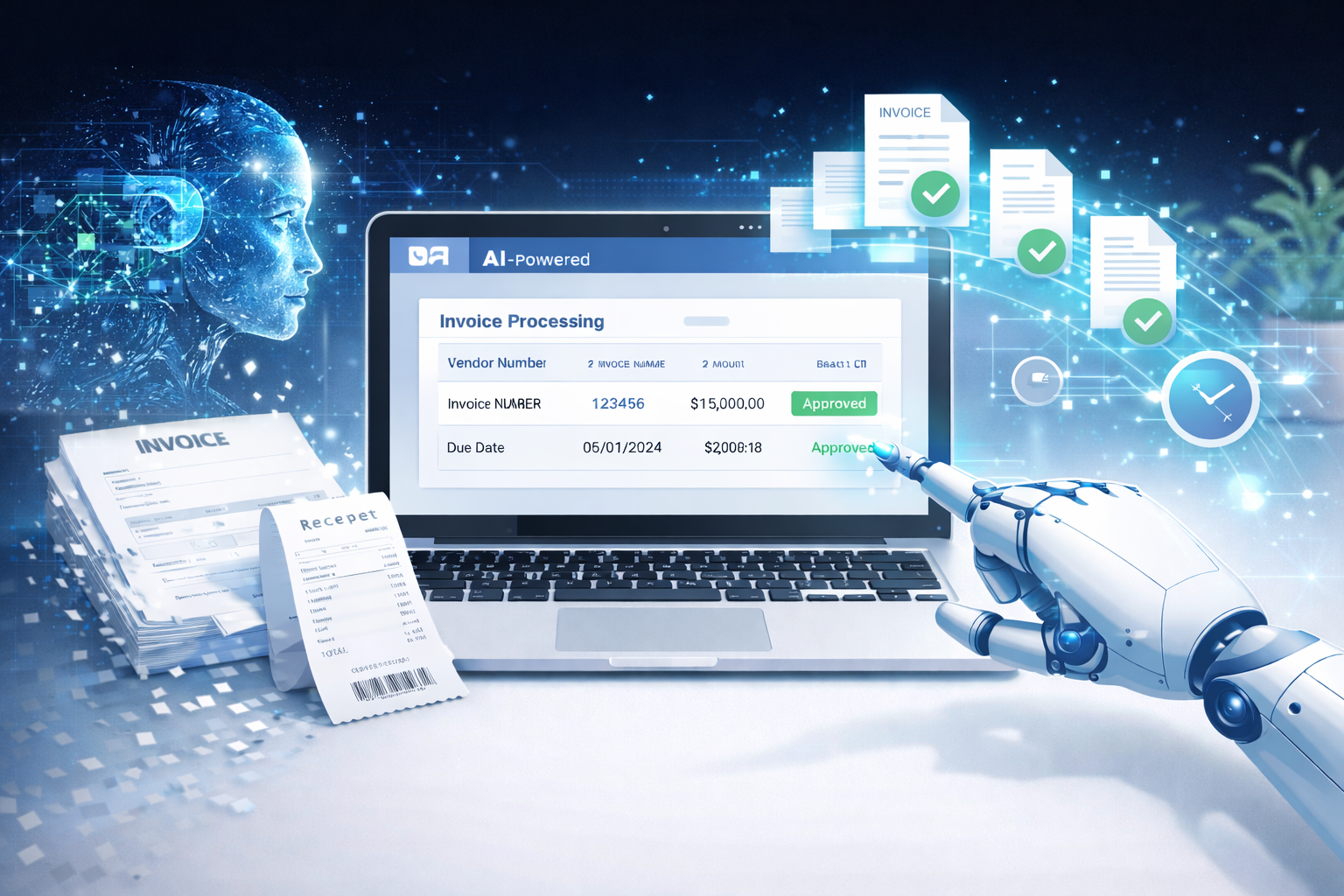
Modern accounts payable systems rely heavily on automation and artificial intelligence to process invoices efficiently.
What is OCR invoice processing?
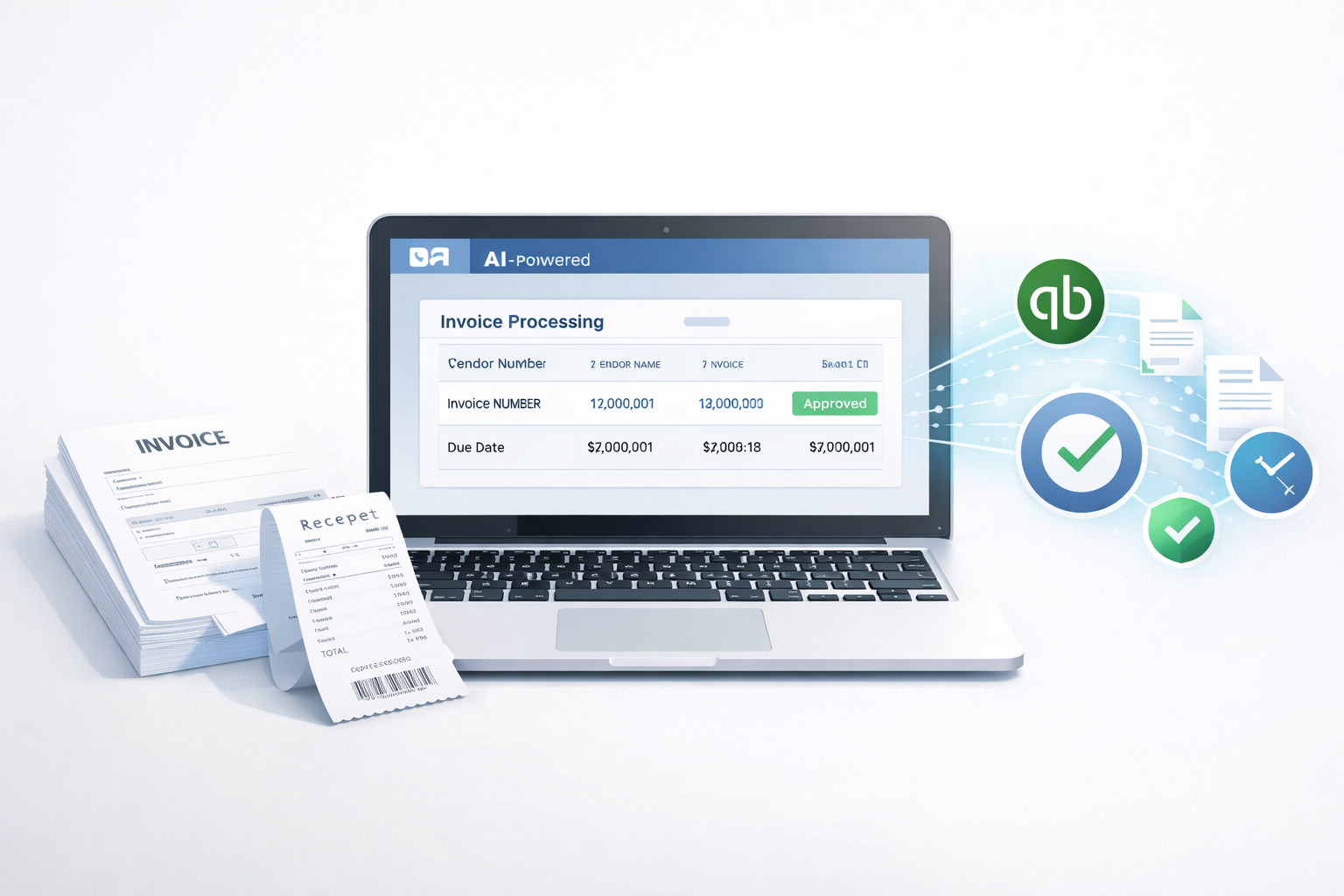
OCR (Optical Character Recognition) technology scans documents and converts text from images or PDFs into structured data that accounting systems can read.
OCR enables finance teams to extract key information such as:
- Supplier name
- Invoice number
- Invoice date
- Tax details
- Currency
- Line items
- Total payable amount
This technology significantly reduces manual data entry.
Benefits of OCR and automation
Implementing accounts payable automation provides several operational advantages:
Faster processing
Invoices can be processed in minutes instead of hours.
Improved accuracy
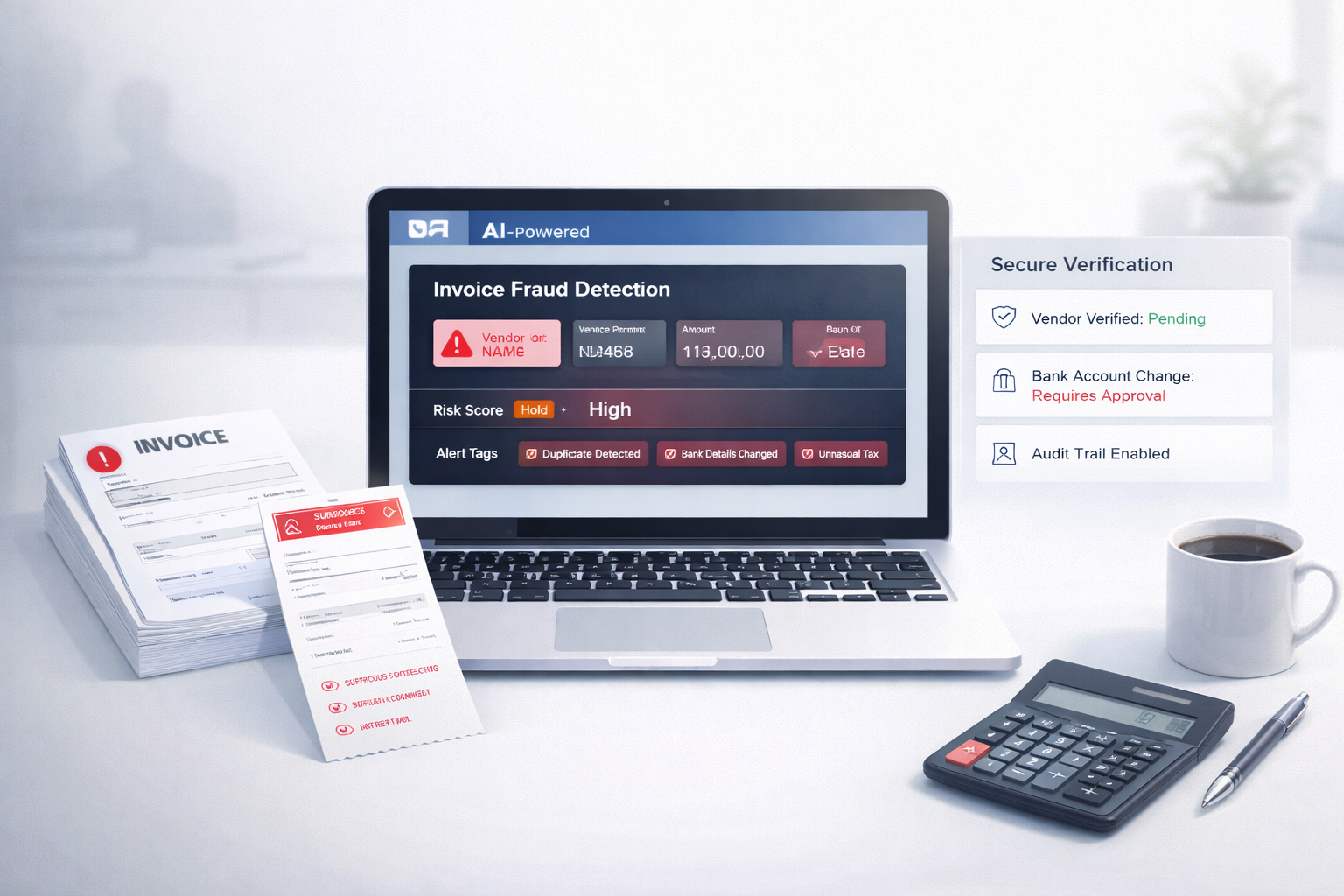
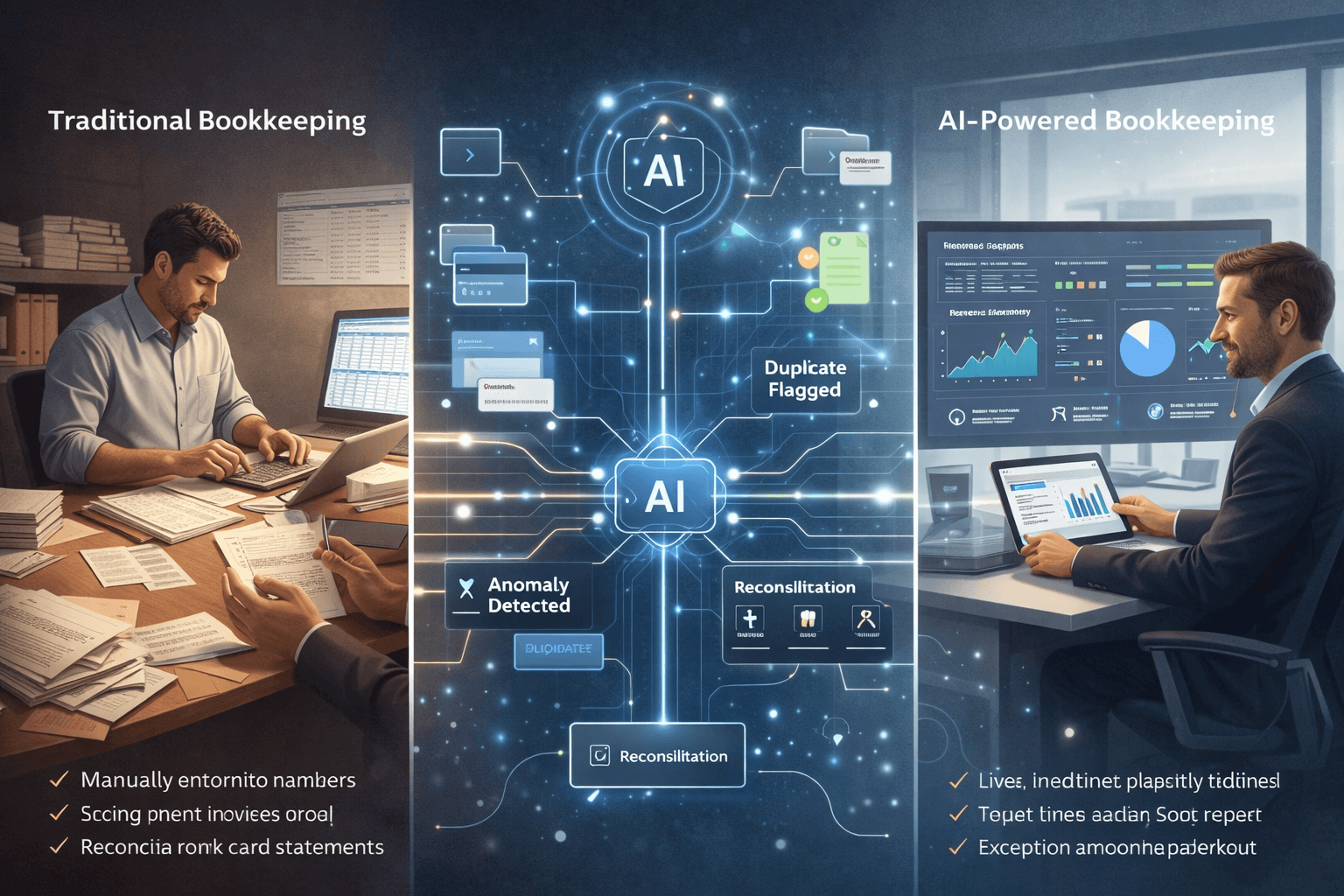
AI-based validation checks ensure data accuracy by identifying:
- Duplicate invoices
- Incorrect tax calculations
- Missing supplier information
Multi-language recognition
Advanced OCR systems support multiple languages and automatically recognize tax terminology across countries.
Automated approval workflows
Invoices can move through predefined approval stages such as:
- Data capture
- Validation
- Manager approval
- Payment authorization
This improves transparency and prevents unauthorized payments.
Why Businesses Outsource Invoice Data Entry and Processing
Many organizations choose to outsource invoice processing to specialized providers.
Professional invoice data entry services offer structured workflows designed specifically for high-volume global invoicing.
Benefits of outsourcing invoice processing
Reduced operational workload
Finance teams can focus on strategic tasks rather than manual data entry.
Improved accuracy
Specialized providers use trained teams and automated systems to verify invoice data.
Faster invoice turnaround
Invoices can be processed and approved faster, ensuring timely supplier payments.
Multi-language expertise
Outsourcing providers often support multi-language accounting support, helping businesses process invoices from different countries.
Scalable operations
As businesses grow and supplier networks expand, outsourced invoice processing can easily scale with increasing invoice volumes.
This approach is particularly valuable for companies handling multi-country accounts payable outsourcing across international markets.
How Elmmetric Simplifies Handwritten and Multi-Language Invoice Processing
For global businesses managing suppliers across different regions, invoice processing often becomes a complex and time-consuming task. Elmmetric addresses these challenges by combining AI-powered invoice automation with fully managed bookkeeping services, allowing finance teams to process invoices accurately regardless of format or language.
Unlike traditional invoice tools that only digitize invoices, Elmmetric provides a complete financial operations layer that combines automation with human verification.
AI-Powered Invoice Processing
Elmmetric’s platform uses advanced OCR invoice processing and AI-driven data extraction to automatically capture key invoice information from multiple formats, including:
- Handwritten supplier invoices
- Scanned PDF invoices
- Multi-language vendor bills
- Email invoice attachments
The platform intelligently extracts fields such as:
- Vendor details
- Invoice numbers
- Line items
- Tax amounts (VAT, GST, TVA, MwSt)
- Currency values
- Payment terms
This automation significantly reduces manual data entry and minimizes the risk of errors.
Multi-Language Invoice Recognition
Global supplier invoices often contain foreign tax terminology and accounting terms. Elmmetric’s system is designed to recognize and interpret these variations.
For example, the platform can correctly process invoices that include:
- “MwSt” (Germany) for VAT
- “TVA” (France) for value-added tax
- “GST” (India) with split tax components
- International currency formats
By standardizing this data into a structured format, Elmmetric enables finance teams to maintain consistent accounting records across countries.
Human-Verified Data Accuracy
While automation accelerates invoice processing, financial accuracy remains critical. Elmmetric combines AI automation with professional review workflows to ensure reliable data capture.
Each processed invoice undergoes verification to confirm:
- Correct tax classification
- Accurate vendor matching
- Valid invoice totals
- Proper general ledger categorization
This automation-first, human-verified approach reduces accounting errors and ensures compliance with international financial standards.
Fully Managed Accounts Payable Support
Elmmetric goes beyond invoice scanning by offering managed bookkeeping services that support the entire accounts payable workflow.
These services include:
- Invoice data entry and processing
- Bank and credit card reconciliation
- Accounts payable cleanup and backlog correction
- Monthly bookkeeping management
- Financial reporting support
- VAT and compliance preparation
This allows businesses to shift from manual invoice management to fully managed financial operations.
Seamless Integration with Accounting Systems
Elmmetric’s platform integrates with popular accounting systems such as QuickBooks and other financial tools, allowing invoice data to automatically sync with the company’s accounting records.
Key integration benefits include:
- Automatic ledger updates
- Real-time financial visibility
- Reduced manual reconciliation
- Faster month-end closing
By connecting invoice processing with accounting systems, Elmmetric creates a streamlined financial workflow.
Built for Scalable Global Operations
As businesses grow internationally, supplier invoices increase in volume and complexity. Elmmetric’s platform is designed to scale with this growth.
Companies benefit from:
- AI-driven invoice processing
- Multi-country accounts payable support
- Structured approval workflows
- Token-based usage models for flexible scaling
This makes Elmmetric particularly valuable for SMEs and global startups managing international vendor networks.
Transforming Invoice Processing into Financial Operations
Traditional invoice tools focus only on document capture. Elmmetric takes a broader approach by becoming the financial backbone for modern SMEs.
By combining:
- AI-powered invoice automation
- Managed bookkeeping services
- Human verification and compliance checks
- Integrated financial reporting
Elmmetric enables businesses to move from manual invoice processing to intelligent financial operations.
Final Thought
Managing handwritten and multi-language invoices is a common challenge for global businesses. With the right combination of automation, verification, and structured workflows, companies can significantly reduce accounting errors and improve financial efficiency.
Elmmetric helps businesses transform invoice processing into a streamlined, AI-powered financial operation ensuring accuracy, compliance, and scalable growth.